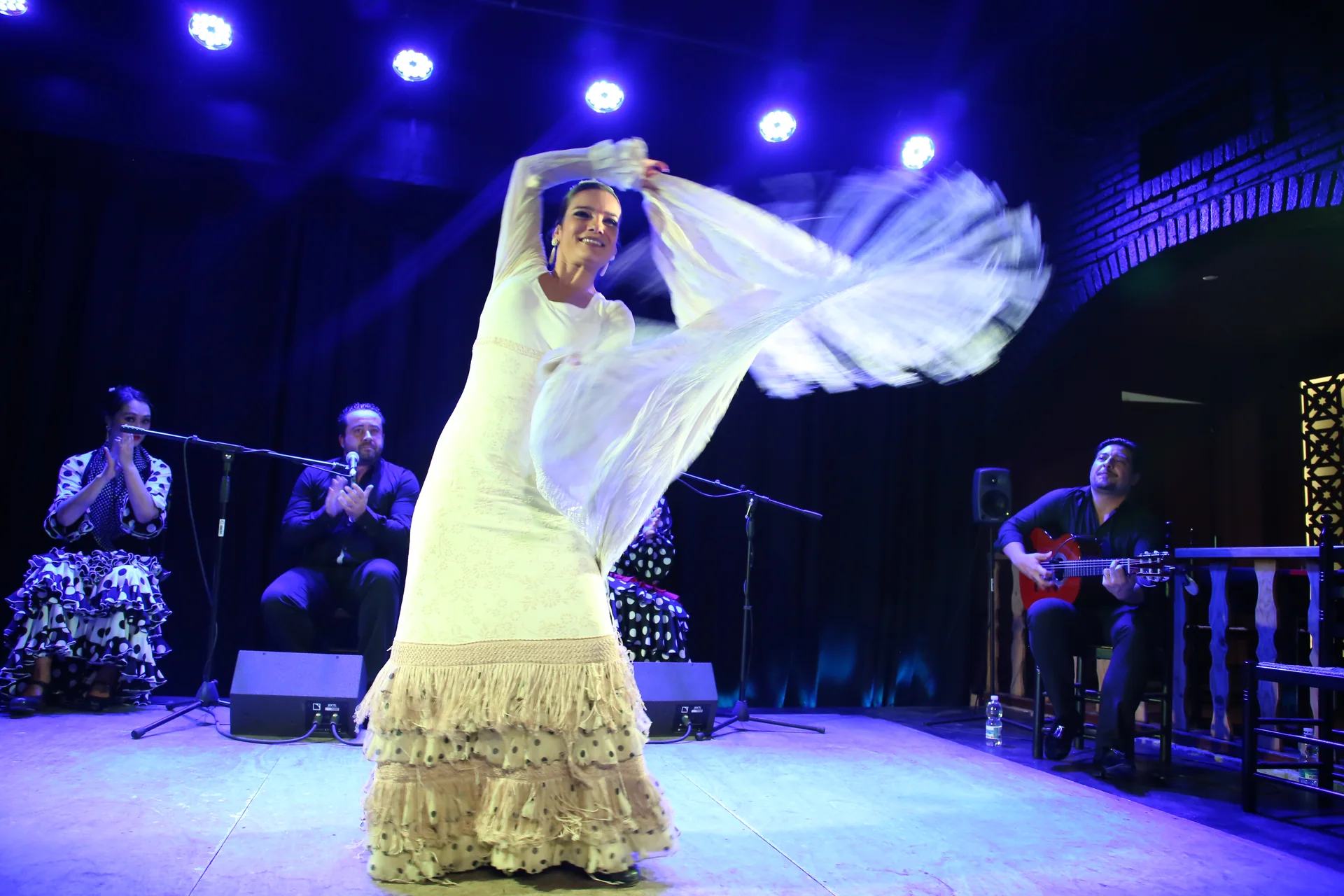
A tablao inside a 1929 village
A village built for an exposition
Poble Espanyol was built between 1926 and 1929 for Barcelona's International Exposition: 117 full-scale buildings, copied from towns across Spain, arranged into one walkable village on Montjuïc. It has stayed open ever since as an open-air architecture museum.
The patio Alfonso XIII opened
The Andalusian patio at the heart of the village was inaugurated by King Alfonso XIII on the exposition's opening day, with a flamenco group made up of one Barcelona family performing for him — the Amayas, from the shanty settlement of Somorrostro.
The village before the show
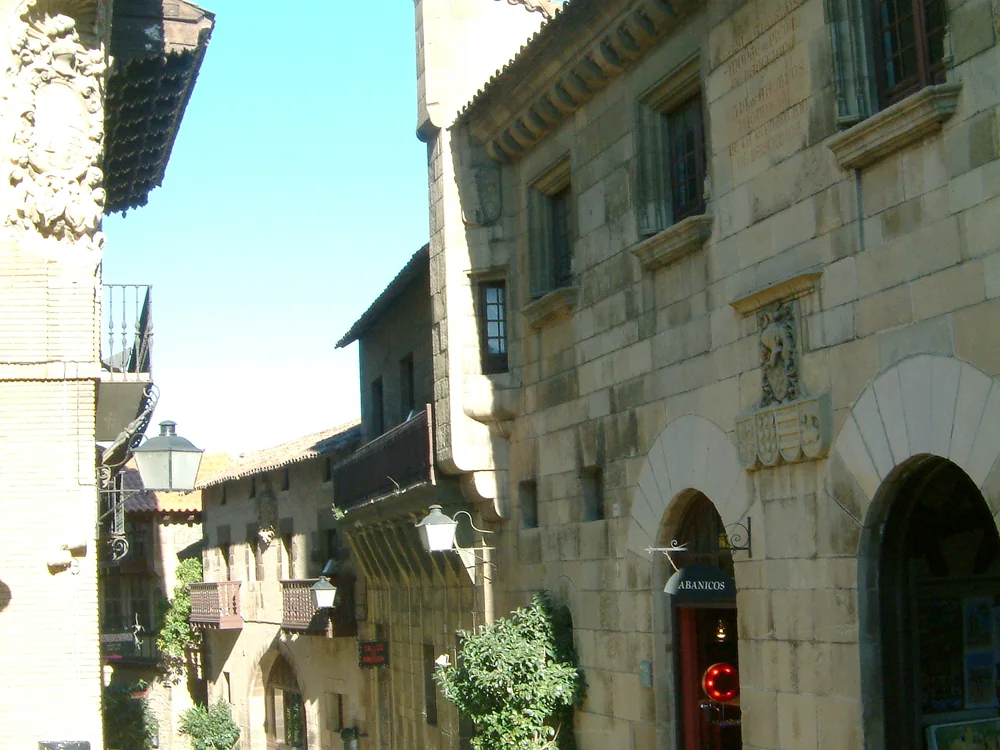
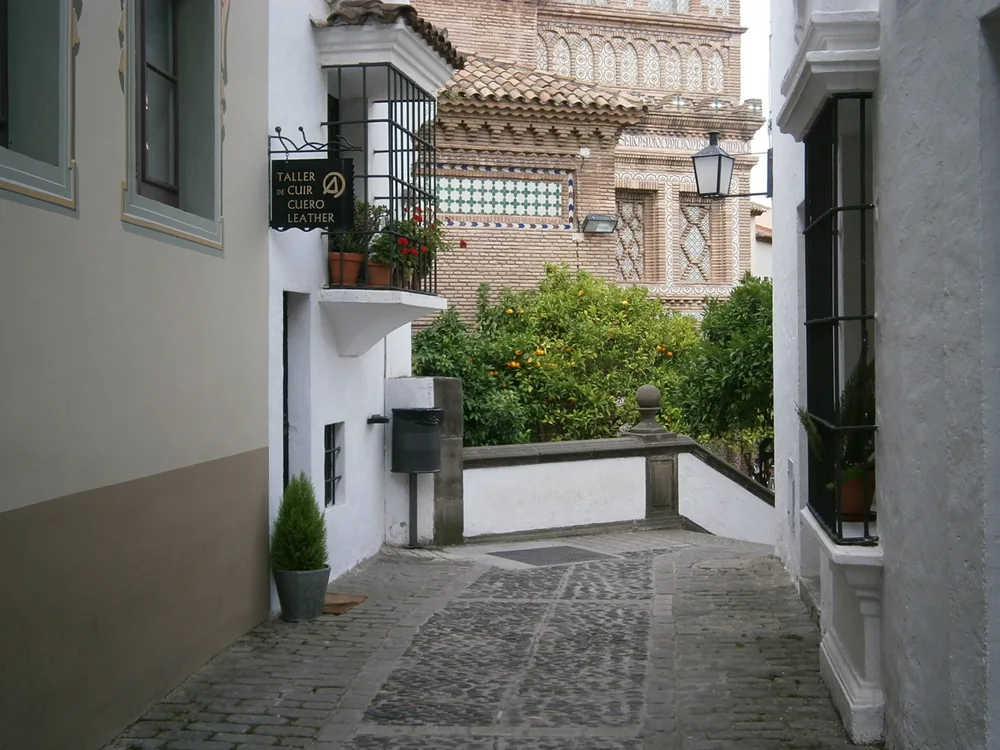
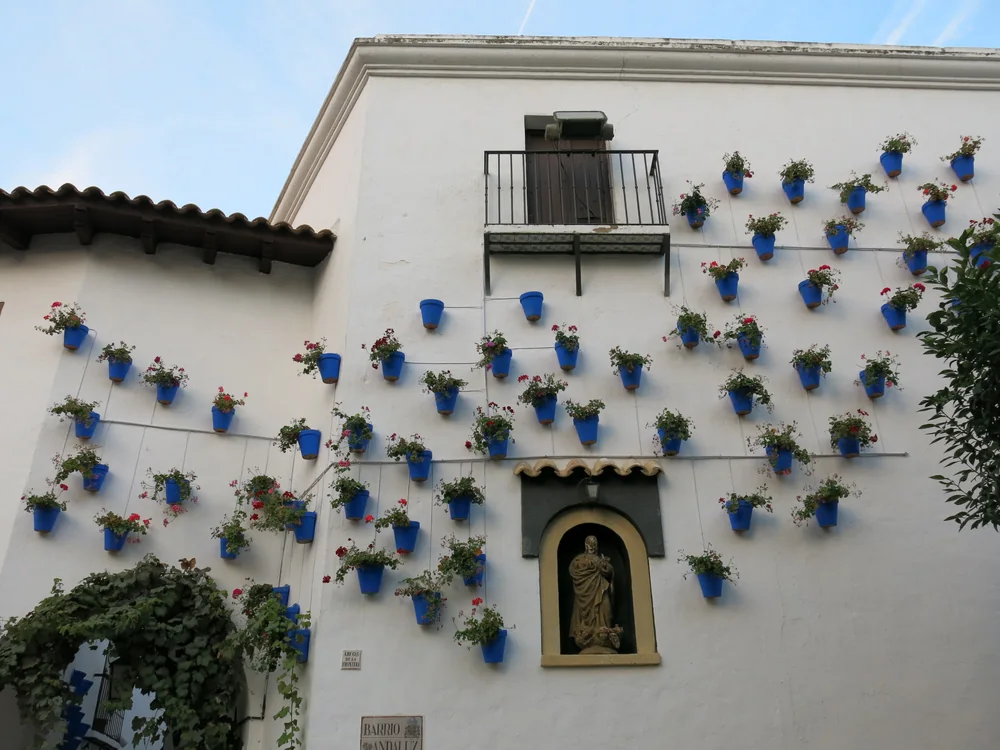
Real photographs of Poble Espanyol's streets and Andalusian quarter — the village around the tablao, not its own room, which isn't published for outside use.
Named for the girl who danced there
Among that family was an eleven-year-old called Carmen Amaya, who went on to become one of the twentieth century's defining flamenco dancers. In 1988 a tablao reopened on that same patio, named in her honour.
A room built for closeness
The room keeps its Andalusian-"corrala"-style decoration — white lanterns, red carnations, tables in stalls and two balconies close enough to the wooden stage that the dinner and the show share the same air.
Carmen
Four chapters, from a Barcelona shantytown to the room that now carries her name.
Somorrostro
Amaya was born into a Romani family of flamenco musicians in Somorrostro, the shanty settlement on Barcelona's beach; her father, José "El Chino", played guitar.
The village's opening
At about eleven she danced for King Alfonso XIII the day this Andalusian patio was inaugurated for the International Exposition — the same ground the tablao stands on now.
Carnegie Hall
She played Carnegie Hall with guitarist Sabicas and was received at the White House by President Roosevelt, part of a career that carried her on through the Americas and Europe.
The tablao in her name
Twenty-five years after her death, a tablao reopened on the same Andalusian patio, named Tablao de Carmen for the dancer who first performed there as a girl.
Every Tablao de Carmen ticket includes same-day admission to Poble Espanyol from 16:00, so the village is worth walking before either seating rather than rushed on the way to a table.
The cuadro and the tapas
Dinner and the show share one room, Andalusian-patio style.
- The tapas menu
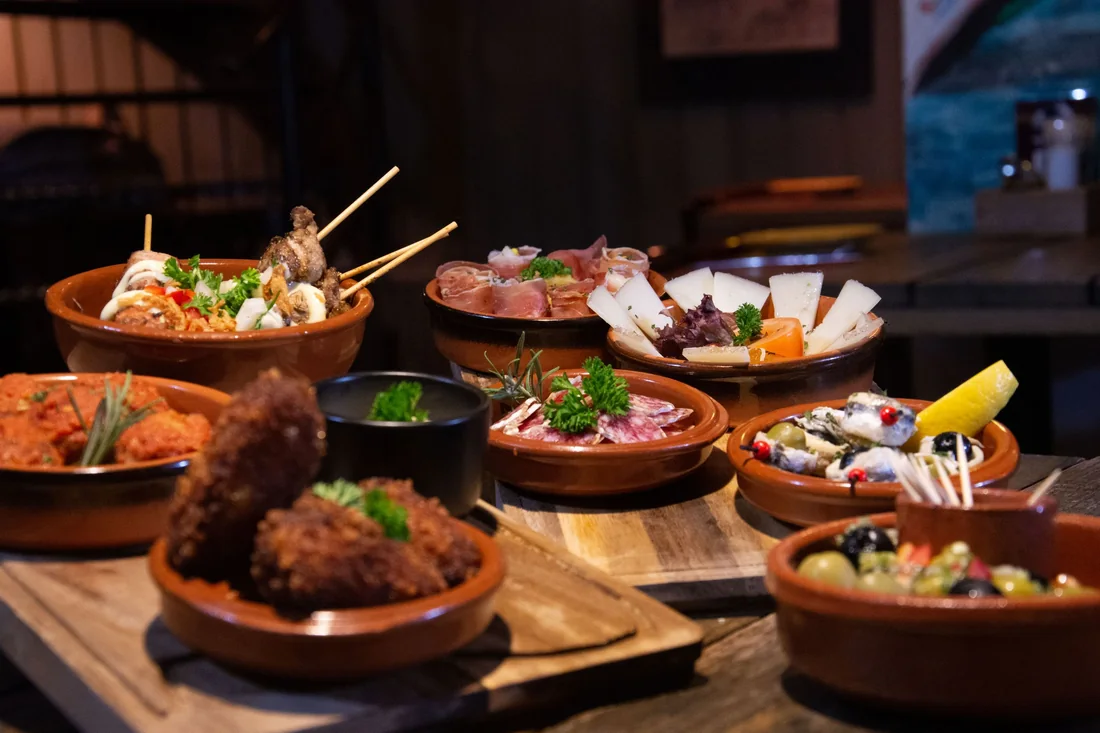
- A run of small Spanish plates with a glass of wine, served at the table before the cuadro takes the stage.
- The cuadro
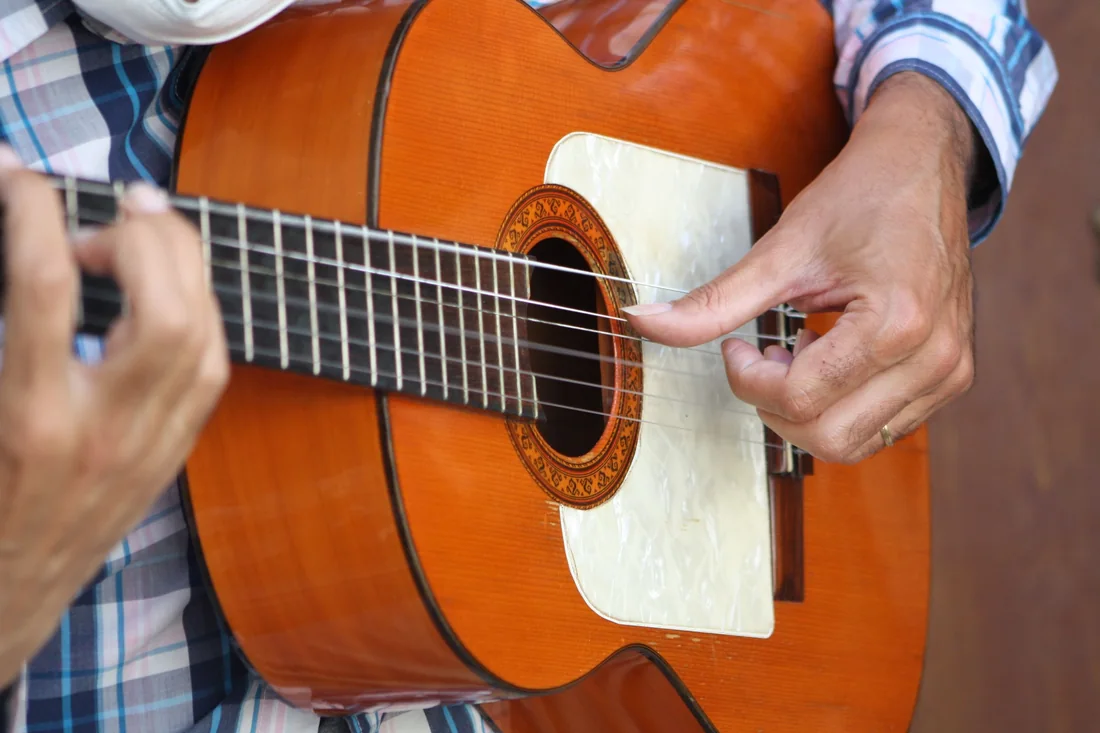
- Singers, guitarists and dancers share the small stage together rather than one soloist carrying the room.
- Two seatings, not one long night
- Each seating is its own full dinner-and-show, not a shared house sitting through both performances back to back.
- Dietary requests
- Tell the operator when you book — one kitchen serving two seatings means changes are easiest arranged ahead of time, not at the table.
Montjuïc, getting there, timing
Up on Montjuïc
Poble Espanyol sits on Montjuïc, reachable by metro to Espanya (L1/L3) and then a short walk or the outdoor escalators, or by the funicular from Paral·lel.
Two seatings a night
Doors open at 18:00 for the earlier dinner and show, and again at 20:30 for the later one; the tablao is closed on Tuesdays.
Admission included
Every ticket includes same-day entry to Poble Espanyol from 16:00, so there's time to walk the village before your table.
What to wear
Smart casual suits the room; there's no strict dress code, though plenty of guests dress up for the evening.
The evening, in order
Both seatings run the same way, about two and a half hours apart.
- 18:00First seating — Doors open for the earlier dinner; tapas or the fuller menu is served before the room quiets for the show.
- 18:45First show — The cuadro takes the stage — guitar, cante and the dancers, inside the corrala-style room.
- 20:30Second seating — Doors open again for the later dinner ahead of the night's second show.
- 21:15Second show — The same programme, performed again for the night's second sitting.
Tablao de Carmen vs Corral de la Morería vs Los Gallos
| Tablao de Carmen | Corral de la Morería | Los Gallos |
|---|---|---|
| Inside Poble Espanyol on Montjuïc; the tapas dinner and the show are one ticket | A Michelin-starred kitchen and tablao in Madrid's La Latina, founded 1956 | A 75-minute show in Seville's Barrio Santa Cruz, opened 1966 |
| An Andalusian-patio room with stalls and two balconies, inside the 1929 exposition village | An intimate room with two shows a night | One of Seville's oldest tablaos, in the old town's historic heart |
| Two seatings a night, tapas or the fuller menu, closed Tuesdays | Two shows a night, a drink or a tasting menu | A single evening show, no dinner service |
| Watching the cuadro over tapas inside a village built for the 1929 exposition | A dressier evening built around the kitchen as much as the stage | A shorter, classic tablao night in Seville's old quarter |
Planning a flamenco evening in Barcelona
The Tablao de Carmen evening, step by step
What actually happens between the 16:00 village admission and the last note of the second show.
Read more → The dancer the room is named forCarmen Amaya, as the tablao tells her story
From a Barcelona shantytown to a command performance for a king, on the same ground where her name now hangs above the door.
Read more → The village around the tablaoThe Poble Espanyol: Barcelona's 1929 village
Why a Michelin of architecture built a whole fake town on Montjuïc, and what's still standing today.
Read more → Dinner and the stageThe cuadro and the tapas, dietary notes included
What a flamenco cuadro actually is, and how the tapas dinner fits around it.
Read more → Getting thereGetting up Montjuïc, and timing your evening
Metro, escalators or the funicular — and how to time the climb around a 18:00 or 20:30 seating.
Read more → Beyond the tablaoBarcelona evenings beyond the tablao
Where a flamenco night on Montjuïc fits alongside the rest of Barcelona after dark.
Read more →Tablao de Carmen questions
Where exactly is Tablao de Carmen?
Inside Poble Espanyol on Montjuïc, at Av. Francesc Ferrer i Guàrdia 13 — the open-air village built for Barcelona's 1929 International Exposition.
Why is it named after Carmen Amaya?
Amaya, born in Barcelona's Somorrostro shantytown in 1918, danced for King Alfonso XIII on this same ground when the Andalusian patio opened in 1929; the tablao reopened in her name in 1988.
Is Poble Espanyol admission included?
Yes — every ticket includes same-day entry to the village from 16:00, so you can walk the streets before your seating.
What time are the shows?
Two seatings run nightly except Tuesdays: dinner from 18:00 with the show at 18:45, and dinner from 20:30 with the show at 21:15.
What does the tapas option include?
A run of small Spanish plates with a glass of wine, served at your table before the cuadro takes the stage; the exact dishes are confirmed on GetYourGuide at checkout.
How do I get to Poble Espanyol?
Take the metro to Espanya (L1/L3) and either walk up or take the outdoor escalators; a funicular also runs from Paral·lel. It's about 20 minutes from the city centre.
Is there a dress code?
No strict dress code — smart casual is fine, though plenty of guests like to dress up for the room.
How long is the show?
About an hour on stage, inside a longer evening that includes dinner or tapas beforehand and time to see the village.
Can I book with free cancellation?
Yes. The GetYourGuide listing offers free cancellation up to 24 hours before the start time for a full refund, and many options let you reserve now and pay later — so you can hold your evening while you finish planning.
More Barcelona experiences
Booked through GetYourGuide, with live availability and the price shown in your own currency.
Find a date for your evening
Live availability and pricing from GetYourGuide, shown in your own currency.
See Tablao de Carmen tickets on GetYourGuide